Scandinavian Living Room: A 2026 Guide
The style is deceptively simple, light wood, neutrals, lots of texture, one statement light. Here's how to actually pull it off without ending up in a beige showroom.
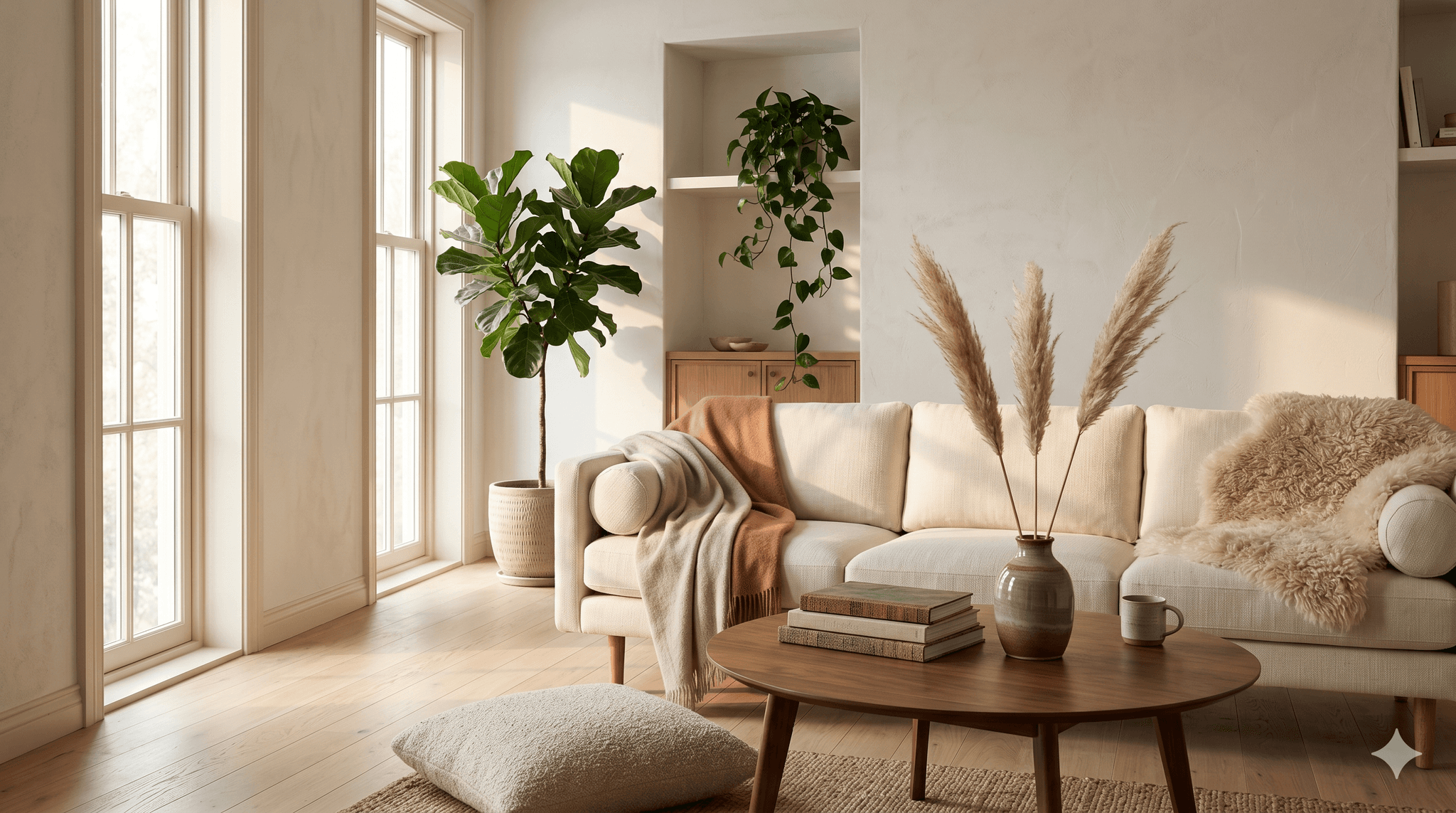
Scandinavian style is the most copied and least understood interior design movement of the last fifteen years. Every furniture retailer has a "Scandi" section. Most of them are missing the point.
Real Scandinavian design isn't a color palette. It's a relationship between light, wood, and restraint, born from Scandinavian winters where natural light is scarce for half the year and rooms need to work hard to feel warm. The aesthetic that emerged from that constraint is what makes a Scandi living room feel different from a generic white-and-beige one: it's tuned for a specific kind of warmth.
This is the 2026 version of how to actually do it.
What the style is, in 2026
Most people who say they want "Scandi" want warm Scandi.
Scandinavian design has split into two distinct approaches over the last five years, and where you land between them defines everything else about the room.
Warm Scandi (sometimes called japandi-adjacent): natural wood tones, oatmeal and clay neutrals, layered wool and linen textiles, brass or matte black accents. Reads as cozy, lived-in, slightly wabi-sabi. This is the dominant 2026 direction.
Minimalist Scandi: more black-and-white, sharper geometry, less texture, more visual breathing room. The Helsinki gallery look. Cleaner but harder to live in.
Most people who say they want "Scandi" want warm Scandi. Confirm this with yourself before buying anything.
The five elements every Scandi living room needs
Miss one and the room reads as flat. Hit all five and it works even if the individual pieces aren't perfect.
You don't need to nail every single piece. You do need to hit all five categories or the room won't read as Scandi, it'll just read as "modern with some wood."
- A light-wood anchor piece (sofa frame, coffee table, or media console, at least one)
- A wool or jute rug (texture matters more than pattern)
- A statement pendant or floor lamp (winter light is the problem the style was invented to solve)
- Layered textiles (throw, two cushions minimum, ideally in different textures)
- One organic-shape object (a curved vase, a sculptural piece, anything that breaks the geometry)
Miss one and the room reads as flat. Hit all five and it works even if the individual pieces aren't perfect.
The sofa
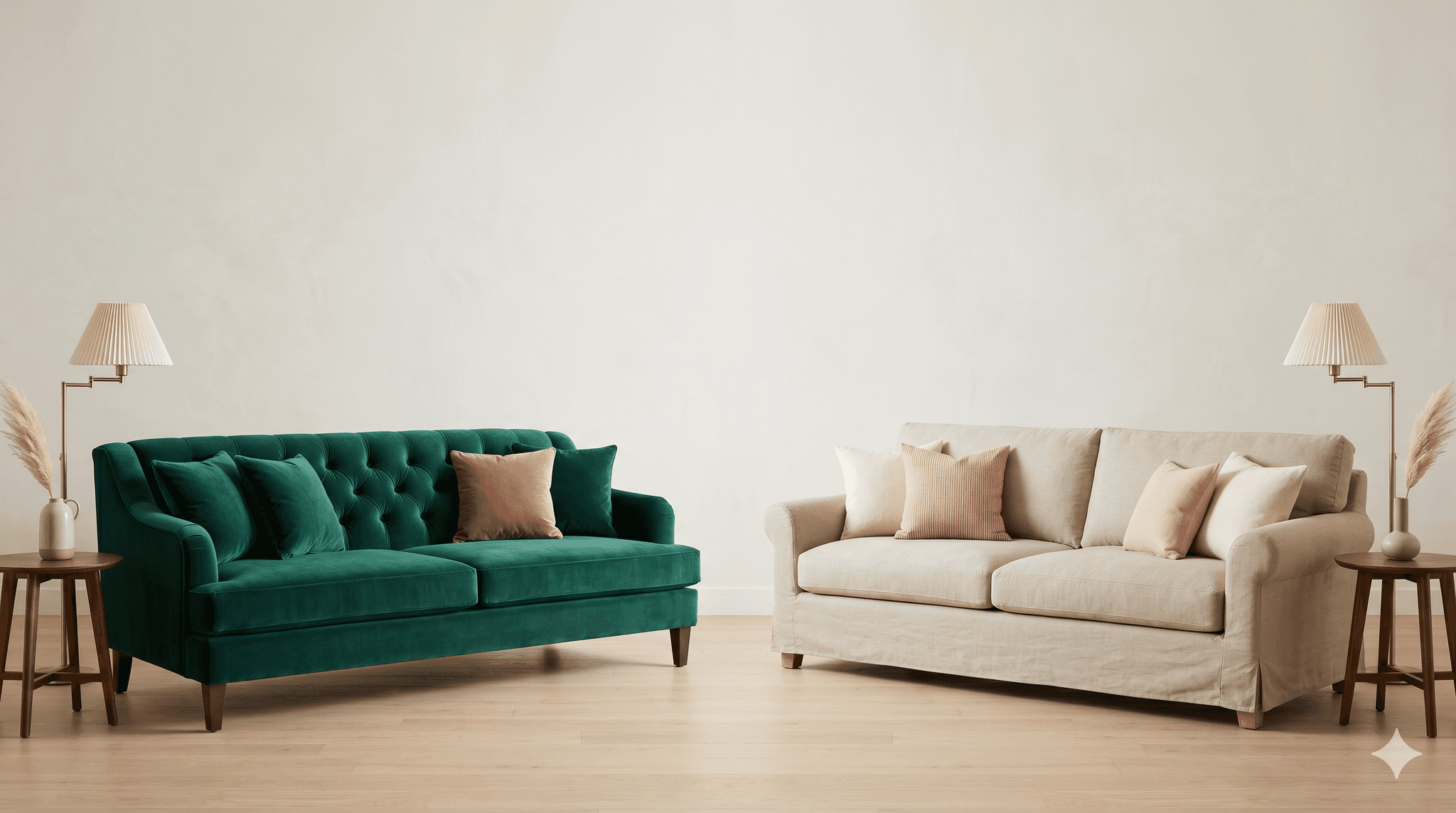
Skip dark leather. Skip jewel tones. Skip anything tufted.
Skip dark leather. Skip jewel tones. Skip anything tufted. The Scandi sofa is low-slung, neutral, and unfussy.
The natural-linen low-slung, around $1,100
The pick is the Ceni 83" Sofa in Buckler Ivory from Article, an oak-base low-slung silhouette in a soft ivory weave with a 16-inch seat height and 50,000-rub durability. The canonical Scandi sofa. Soft, casual, photographs beautifully. Best for: the warm Scandi direction.
The light-grey performance velvet, around $1,400
The pick is the Sven 88" Tufted Sofa in Hale Warm Gray from Article, performance velvet in a warm dove tone with bolster pillows and fade-resistant Hale fabric. For people who want Scandi but have pets or kids and can't commit to linen. Best for: households that need durability without losing the aesthetic.
The coffee table
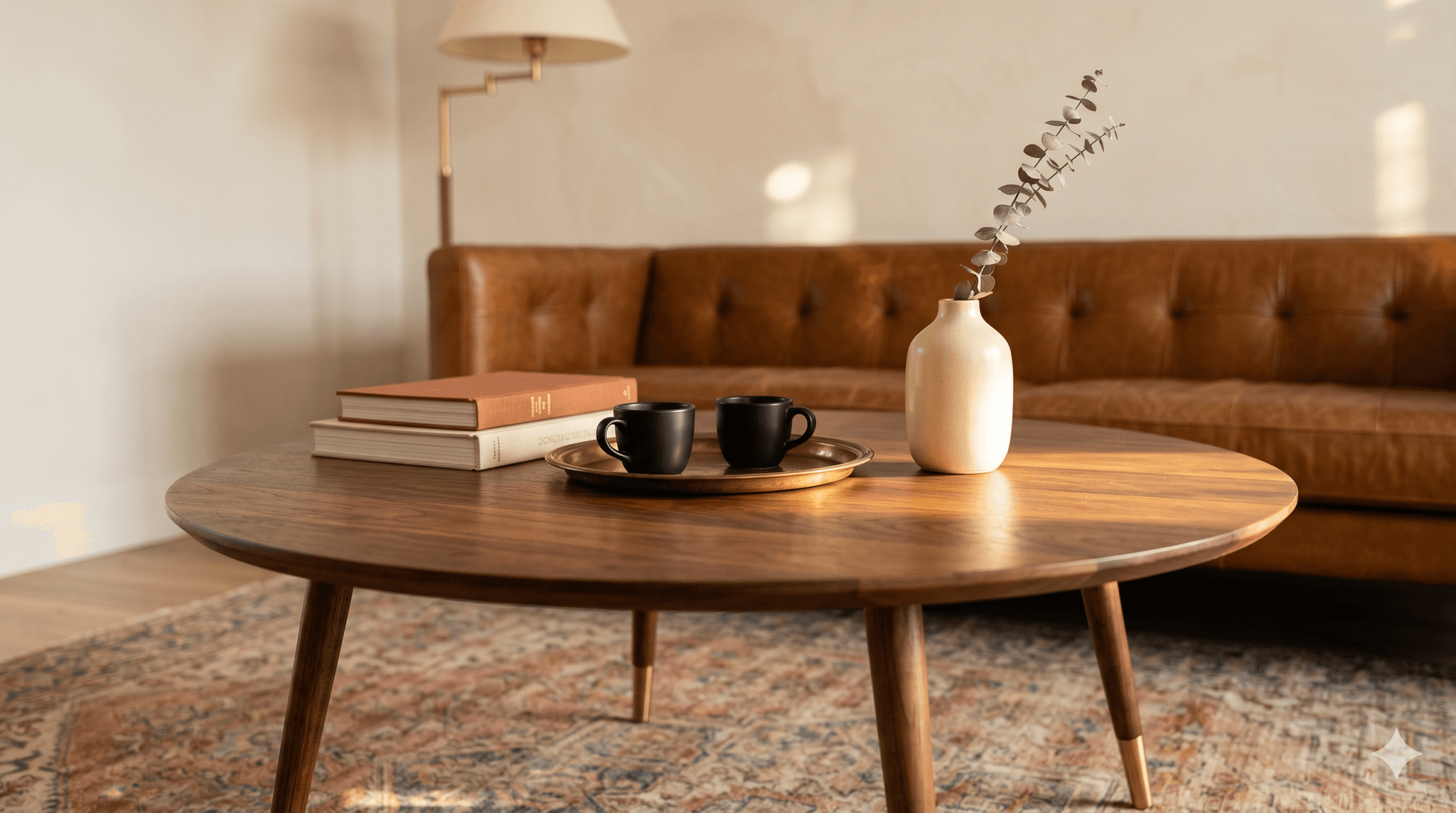
Light wood. Always light wood. Walnut is too dark for Scandi, it pulls the room toward mid-century. Go with oak, ash, or beech.
The oak round, $299
The pick is the Amoeba 35.5" Round Coffee Table in White Oak from Article, solid white oak laminated with visible grain on three splayed legs at a 17.5-inch height. Round shape softens the room and reads more Scandinavian than a square would. Best for: medium living rooms with a 84" to 96" sofa.
The white-oak surfboard with shelf, $399
The pick is the Lenia 53.5" Oval Coffee Table in White Oak from Article, a 53.5-inch long oval (mid-century surfboard silhouette) in solid white oak with a built-in spindle shelf underneath for books and sculptural objects. The lower shelf is essential, Scandi rooms need visible texture layers, and the shelf gives you a place to display books and sculptural objects. Best for: larger living rooms, anyone who likes styled coffee tables.
The rug
This is the layer most people get wrong. Scandi rugs are not patterned. They're textured. The interest comes from the weave, not from a print.
The wool berber, $699
The pick is the Clyde 8x10 Wool Rug in Textured Ivory from Article, hand-tufted 100 percent wool with a subtle parquet pattern and a 1/3-inch pile. The classic Scandi rug. High pile, textural, doesn't compete with anything else in the room. Best for: living rooms over 12'x14'.
The natural jute, around $500
The pick is the Nilium 8x10 Jute Rug in Natural Tan from Article, tightly woven jute in a warm tan that reads as oatmeal under natural light. The budget option. Less plush than wool but reads the same in photos and on the eye. Best for: rentals, first apartments, high-traffic rooms where you don't want to baby a rug.
The lighting (the most important purchase)
Lighting is not decoration, it's the entire reason the style works.
Scandinavian design exists because of dark winters. Lighting is not decoration, it's the entire reason the style works. Most rooms fail because they have one overhead light and call it a day. A Scandi living room needs three light sources minimum: an overhead or pendant, a floor lamp, and a table lamp.
The paper pendant, $192
IKEA's Regolit at $20 is the budget benchmark and a real piece of Scandi design history, but their paper pendants are not on the Skimlinks roster. The closest step-up that is: the Pablo Pendant Light from Lulu and Georgia, a 10-inch eco-friendly paper mache dome with a soft, sculptural silhouette. Diffuses light beautifully and reads as iconic Scandi instantly. Best for: the central overhead position.
The arc floor lamp, $129
The pick is the Monroe Floor Lamp in Black from Article, an arc-style lamp on a polished marble base with brass swivel detail and a 64.5-inch stem that cantilevers over a seating area. Reaches over the sofa or reading chair to provide directional light without needing a side table. Best for: rooms that don't have side-table space next to seating.
The ceramic table lamp, $149
The pick is the Brie Table Lamp in White Ceramic from Article, a 23-inch coastal-style lamp with a textured ceramic base and a soft linen shade. Each piece has slight glaze variations. The third light source. Goes on a side table or console. Best for: completing the three-source rule.
The textiles (where the warmth comes from)
The textiles should feel collected over time, not bought together.
A throw and two cushions, minimum. Different textures, similar tonal values. The mistake is matching too tightly, the textiles should feel collected over time, not bought together.
The three pieces that actually do the work:
- A Chunky Hand Knit Wool Throw from Quince draped at the foot of the sofa, hand-knit in a 50"x60" panel that doubles as a real winter blanket.
- A Red Clay Ribbed Wool Cotton Pillow Cover from Quince for the warm earthy accent. One is enough, two starts to look matchy.
- A Gabriola Ivory Boucle Pillow Set from Article for the second texture, two 20-inch boucle pillows in a cream tone that picks up the rug.
A leather pillow in caramel is the optional fourth, but skip it unless the rest of the room already has a brown anchor; otherwise the leather reads as the only warm element and the balance tips.
The accents
One organic-shape vase. One sculptural object. Dried grasses or a single dramatic branch (not a leafy plant, Scandi rooms favor dried over green).
- The Atalia Modern Ceramic Vase from Lulu and Georgia, a 17.5-inch handcrafted vase with curved silhouette and earthy neutral tone. Sits on the coffee table shelf or the console.
- Dried pampas grass or eucalyptus branches in the vase. Most of the good ones come from independent Etsy shops or local florists; no single retailer dominates here. Buy bigger stems than you think you need.
- The Nenita Stone and Iron Sculpture from Lulu and Georgia, a 20-inch marble arc with scored texture on an iron base. Sits on a console, mantel, or open shelf.
Color palette that actually works
Forget all-white. The 2026 Scandi palette has more depth:
- Walls: warm white (Benjamin Moore Simply White or Farrow & Ball Pointing), never pure cool white
- Wood tones: light oak, ash, beech (skip walnut, mahogany)
- Neutrals: oatmeal, sand, clay, soft grey
- Accent colors (one only): sage green, dusty terracotta, or navy, never more than one
- Metal: matte brass or matte black, not both
Common mistakes
Too much white. Pure-white rooms photograph well and live coldly. Warm whites with cream and oatmeal accents are the goal.
Pattern overload. Scandi rugs are textured, not patterned. Scandi cushions are textured, not patterned. The pattern in a Scandi room is the wood grain.
Wrong wood tones. Mixing walnut and light oak makes the room look indecisive. Pick a wood family and stay there.
Plastic plants. A Scandi room with fake plants reads as a showroom. Use dried botanicals or commit to one real plant you can keep alive.
Track lighting. Track lighting destroys the warmth. If the room has track lighting, replace it before you do anything else.
FAQ
Is Scandi style going out of style? No. It's been the dominant aesthetic in mid-range design for 15 years and shows no signs of slowing. The specific direction shifts (currently toward warm/japandi, away from minimalist) but the foundation is durable.
Can I do Scandi in a small apartment? Yes, it's actually one of the best styles for small spaces because the light palette and minimal pattern make rooms feel larger.
Is Scandi the same as minimalist? No. Minimalism is about reducing. Scandi is about layering carefully. A Scandi room has more stuff in it than a minimalist room, it just looks like it doesn't because everything is tonally cohesive.
Where do I find authentic Scandinavian brands vs. lookalikes? Hay, Muuto, Ferm Living, Skagerak, and Menu are real Scandinavian design houses (some now owned by larger groups but still design-rooted). Most US retailers sell Scandi-inspired pieces; that's fine for the look but not the heritage.
What's the difference between Scandi and japandi? Japandi is Scandi + Japanese, same warm neutral palette, but with darker contrasts (charcoal, black), lower furniture profiles, and more wabi-sabi imperfection. The 2026 warm Scandi direction has absorbed a lot of japandi influence already.
Updated: May 2026. Hassan Muhsen is the founder of Furnish, the AI app that designs your actual room and lets you shop every piece in it. Join the waitlist at furnish.live.
Try Furnish on your room
Take a photo. Furnish does the rest.
Snap any room. Furnish redesigns it in your style and shows you every piece, real and shoppable.
Hassan Muhsen
Founder of Furnish. Writes about why he built it and what comes next.