Interior Design Trends 2026 (And Which Ones to Actually Pay Attention To)
Most 'trend' lists are noise. Here are the seven directions that are actually shaping how people are designing their homes this year, and the three you can safely ignore.
Interior design trends are slower than fashion trends and faster than architecture trends. A real shift in how people design their homes takes 18–24 months to spread, peaks for about 3 years, and gets replaced over the following 5. Anyone telling you a trend is "in for 2026" with confidence is mostly making it up.
That said: there are real movements happening in 2026, and you can spot them by looking at where the design trade is investing, what showrooms are featuring, what mid-range retailers are stocking, what the higher-end brands are previewing. Here's what's actually happening, what to take seriously, and what to skip.
Seven trends actually shaping 2026
1. Warm minimalism is replacing cool minimalism
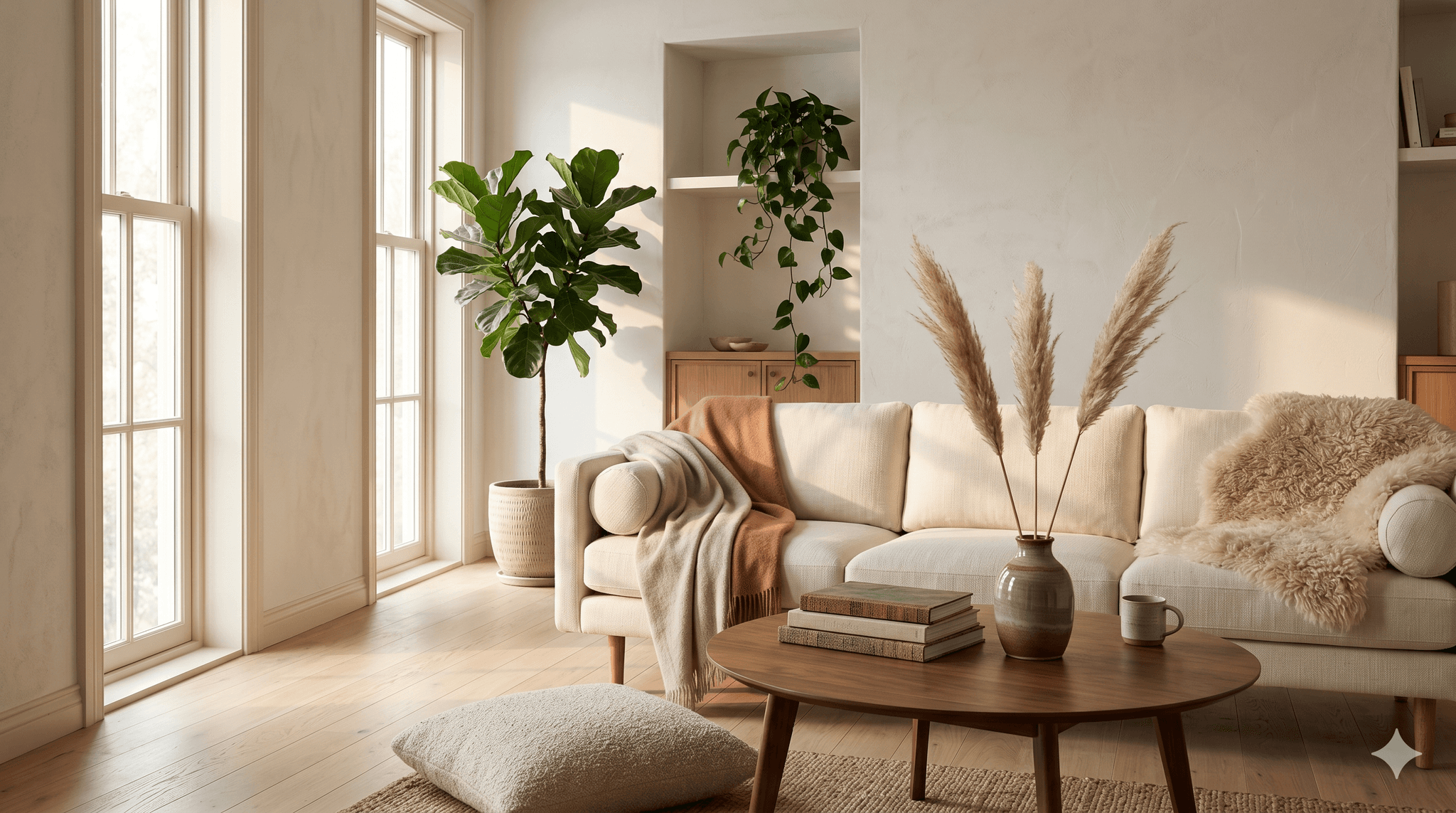
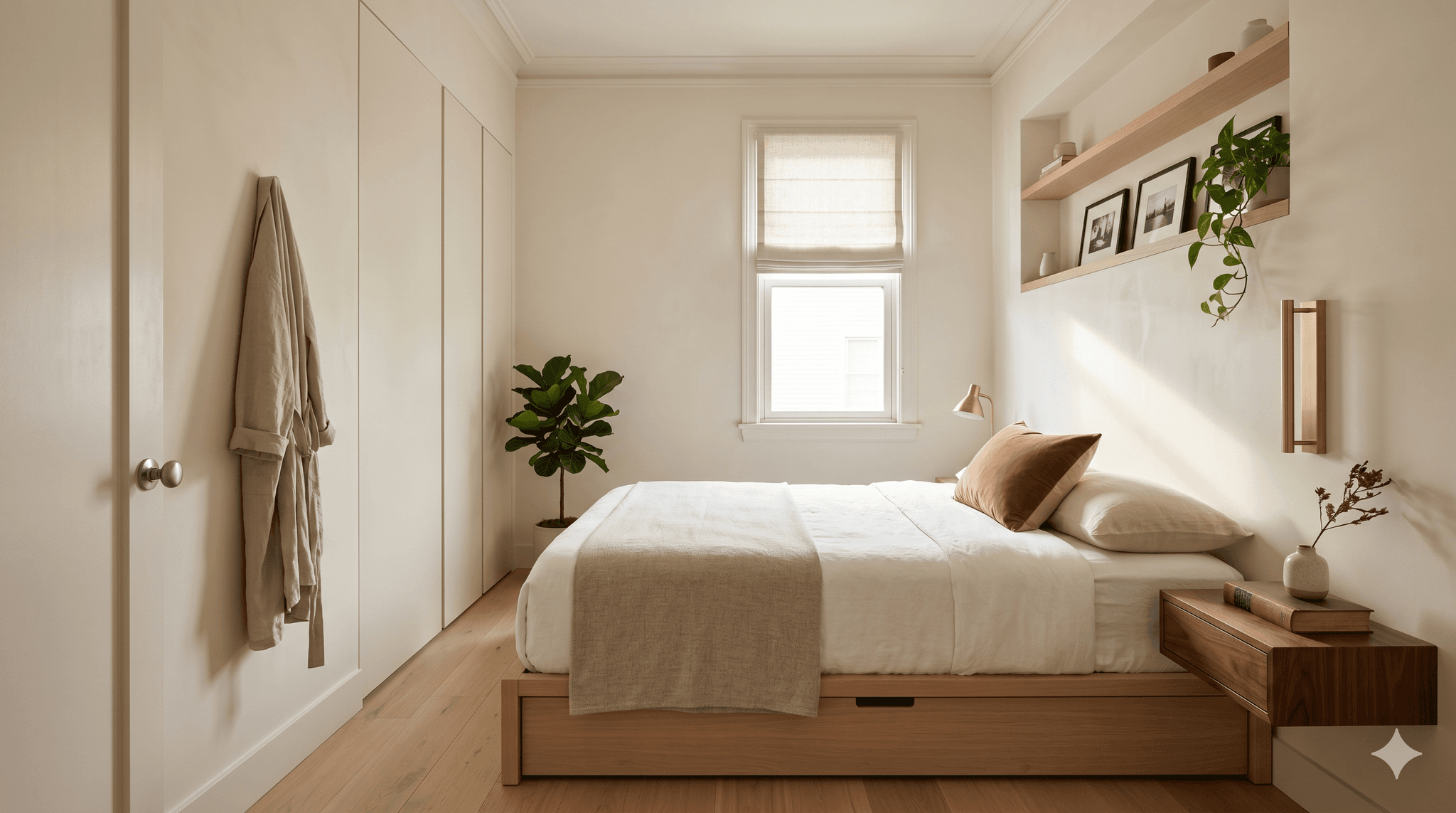
The all-white-and-grey minimalist look that dominated 2015–2022 is finished. What's replacing it isn't maximalism, it's warm minimalism. Same restraint, same uncluttered surfaces, but the palette has shifted to oatmeal, clay, mushroom, and warm wood tones. Brass instead of chrome. Cream instead of white.
This is the dominant 2026 direction and it's not going away anytime soon, it's a 5-year movement, not a season.
One example doing it well: the Ceni 83" Sofa in Buckler Ivory from Article.
2. Curved everything
Sofas with curved backs. Round coffee tables. Arched mirrors. Curved upholstered headboards. The 2020s sharp-geometry look is softening across every category.
This is real and worth investing in if you're buying new. Curved furniture photographs better and feels less aggressive in a room. The risk: it dates faster than rectilinear furniture. A square walnut coffee table looks the same in 2030 as it does in 2026; an extreme-curve sofa might not.
One example doing it well: the Alice Curved Brass Wall Mirror from Article.
3. The return of brown
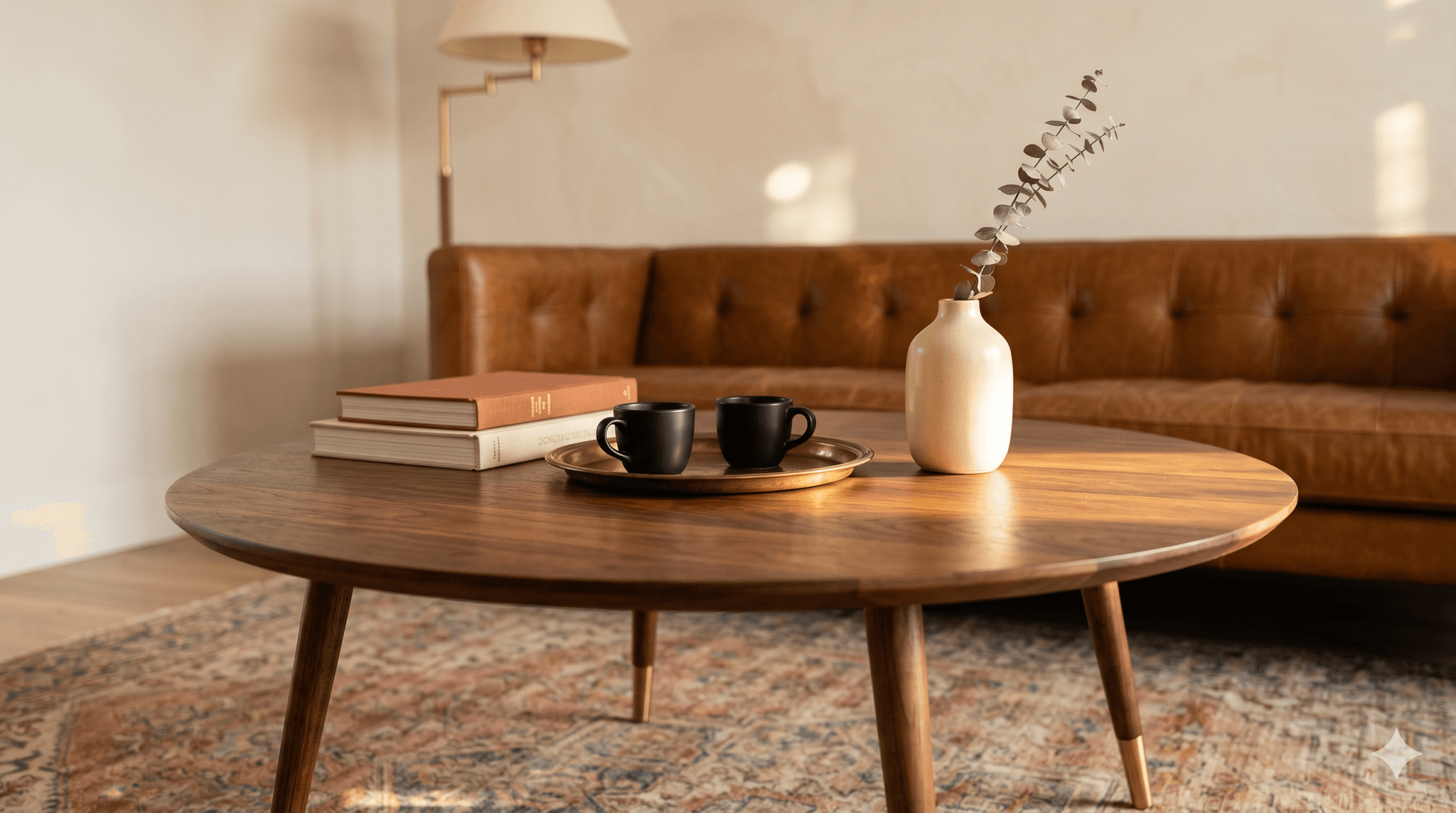
Brown furniture, actual brown, not "warm neutral", is coming back hard after a decade of being unfashionable. Walnut, mahogany, dark leather, chocolate velvets. Designers are calling it "library brown" or "saddle brown" depending on the context.
This is a real movement. Brown ages well, hides wear, and reads as adult in a way pale neutrals don't. If you've been avoiding brown because it felt dated, you can stop.
One example doing it well: the Lenia 63" Low Media Unit in Walnut from Article.
4. Statement lighting as the new statement art
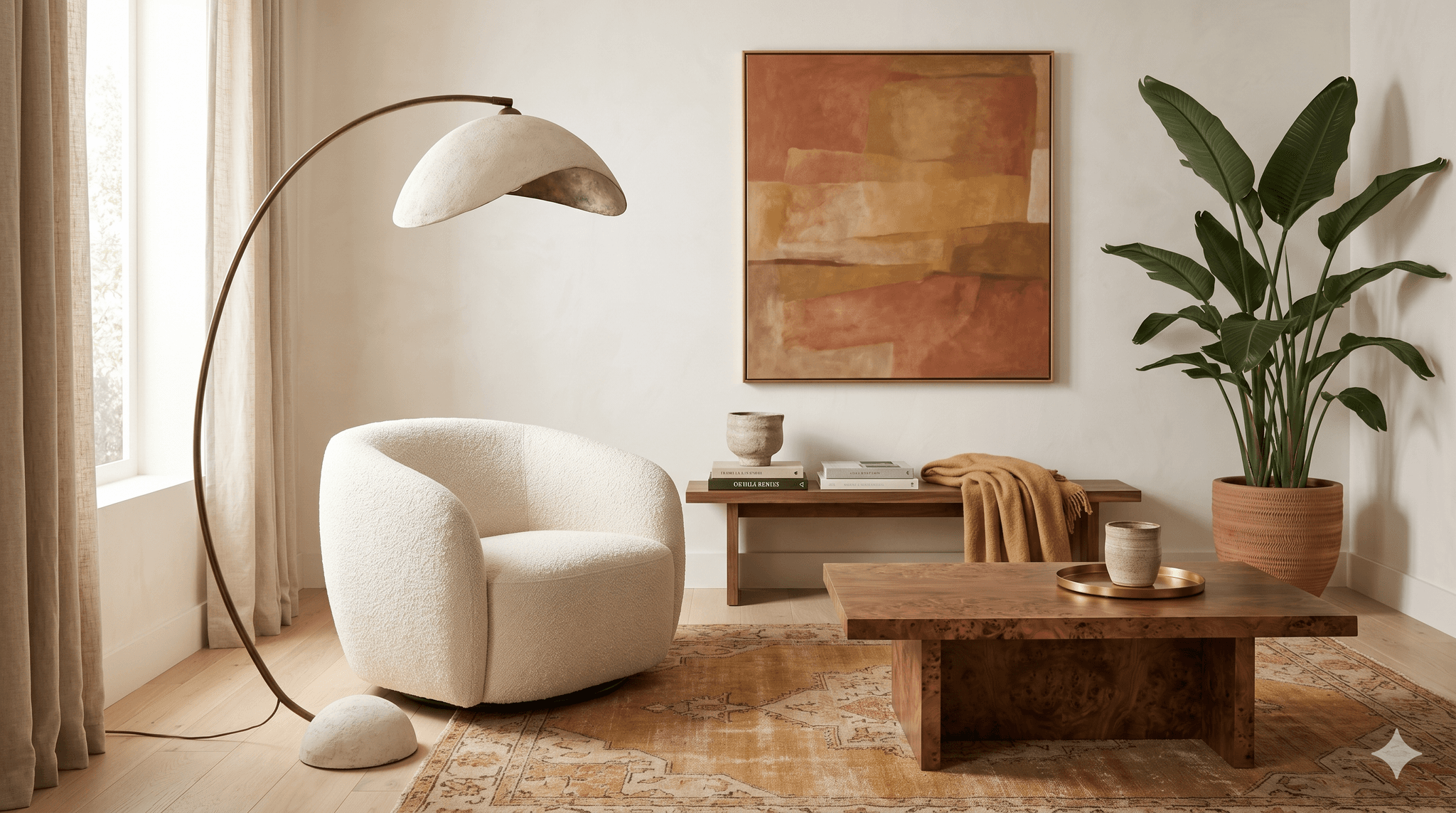
People are spending less on art and more on light fixtures. A $2,000 pendant in the dining room is the 2026 equivalent of a $2,000 painting in 2018. Sculptural lighting, paper, alabaster, mouth-blown glass, sculptural metal, is the design industry's biggest growth category.
Take this seriously. The right light fixture transforms a room more than any other single object.
One example doing it well: the Pablo Pendant Light from Lulu and Georgia.
5. Vintage-first sourcing
Algorithmic discovery has made vintage furniture findable in a way it wasn't five years ago. Chairish, 1stDibs, Facebook Marketplace people are increasingly buying one or two vintage pieces per room and filling in around them with new. The "all-vintage" room is rare; the "mostly new with a vintage anchor" room is now standard.
This is the most durable trend on the list. It's not really a trend, it's a permanent shift in how people source furniture, enabled by better marketplaces.
6. Color drenching (one room, one color)
Walls, trim, and ceiling all painted the same color, often a saturated one, deep green, warm terracotta, dusty plum. Less common in living rooms, more common in dens, libraries, and dining rooms.
Real but specialized. Don't color-drench a room you spend the most time in unless you're sure. The look is striking but tiring.
7. Quiet luxury (in furniture form)
Following the same shift in fashion, "quiet luxury" furniture means expensive materials with no visible branding or trend-chasing. Real linen, real wool, solid hardwood, vegetable-tanned leather. The opposite of disposable furniture.
Worth the investment if your budget allows. Quiet luxury furniture is the only category that genuinely lasts 20+ years.
One example doing it well: the Clyde 8x10 Wool Rug in Textured Ivory from Article.
Three trends to skip
Boucle furniture
Boucle had its moment in 2021–2023. It's now showing the wear that designers warned about, pilling, snagging, looking dirty within months. If you don't already own boucle, don't buy it now.
Heavy fluting
Fluted wood paneling on every surface had its 18 months. The look is cresting and will be visibly dated by 2027. If you love it, do it on one feature only, a single piece of furniture, not the whole room.
Disco-revival accents
Glass tile, mirrored furniture, chrome everything. This is a seasonal aesthetic, not a real movement. Renting it through inexpensive accents (a chrome lamp, a glass tile coaster) is fine; buying a chrome dining table is a 2-year decision masquerading as permanent.
How to actually use trend information
Buy permanent things in classic shapes.
Three rules:
Buy permanent things in classic shapes. Sofa, dining table, bed frame, primary lighting, these should be in shapes that work in 2030 and 2040, not just 2026.
Buy trendy things in cheap formats. Want to try color drenching? Paint one wall, see how you live with it, paint over if you hate it. Want fluted detail? Buy one fluted side table, not a fluted bed.
Ignore anything that requires you to throw out things you already own. No real trend asks you to replace your sofa. If a trend article tells you your perfectly good furniture is "out," it's an article designed to sell you new furniture.
FAQ
Is mid-century modern still a trend? Mid-century has graduated from a trend to a permanent style category, like contemporary or traditional. It will be sold under that name for the foreseeable future.
What about maximalism? Real maximalism is still a niche aesthetic, not a 2026 trend. What's actually growing is layered design, more textures, more objects, more vintage, but still within a restrained palette.
Is open shelving over? In kitchens, mostly yes. In living rooms, no, open shelving as a display feature for books and ceramics is alive and well.
Should I jump on a trend now or wait? Wait until at least year three of a trend before buying any expensive piece in that style. By year three you'll know if it's durable. Years one and two are when you experiment with inexpensive pieces.
What's the safest "trend-resistant" furniture style? Mid-century modern, traditional in a restrained palette, or warm minimalism. Each has been stylistically stable for decades and will keep being so.
Updated: March 2026. Hassan Muhsen is the founder of Furnish, the AI app that designs your actual room and lets you shop every piece in it. Join the waitlist at furnish.live.
Try Furnish on your room
Take a photo. Furnish does the rest.
Snap any room. Furnish redesigns it in your style and shows you every piece, real and shoppable.
Hassan Muhsen
Founder of Furnish. Writes about why he built it and what comes next.